
Property Care · 18 September 2026
What good property care looks like between cleaning days
A practical approach to keeping a home, short-let or managed property clean, presentable and easier to maintain in Uyo and Eket.
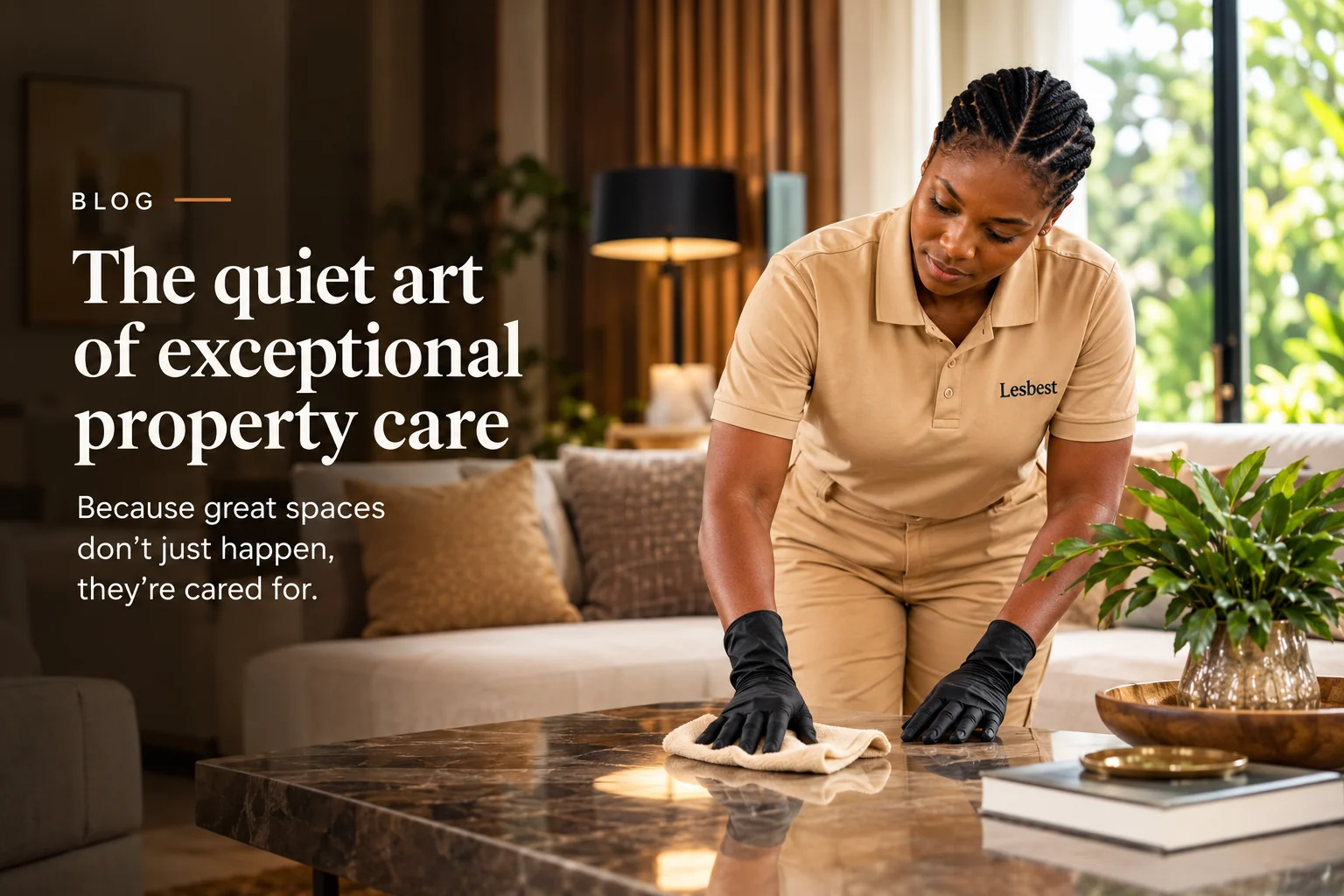
A property does not need to look like a showroom to be well cared for. It should feel clean when people walk in, work properly from room to room and be ready for the family, visitor, tenant or client using it that day. That result usually comes from simple routines carried out consistently, not a frantic clean only when someone is expected.
Start with how the property is actually used
The useful question is not simply, ‘How many rooms are there?’ It is, ‘What happens here every day?’ A family home with children, a quiet apartment used for short lets and an office reception may have similar floor space, but they collect dirt in different places and need different attention. Entryways, kitchens, guest bathrooms, stair rails and frequently touched switches are usually where a routine shows first.
In Uyo and Eket, dust can settle quickly during dry weather, particularly in properties near unpaved roads or active building work. During the rains, the problem often changes to damp corners, marks from wet footwear and moisture around windows, cupboards and bathrooms. A good cleaning plan changes with the season instead of treating every visit as identical.
Walk through the property at the time it is busiest. Notice where shoes are removed, where bags are dropped, which bathroom visitors use and where food is prepared. Those observations help decide what needs daily attention, what can wait for the weekly clean and what needs a periodic deep clean. It is a more sensible way to spend a cleaning budget than giving every room the same amount of time.
“The best routine is the one that keeps small issues from becoming big jobs.”
Protect finishes before they become a repair job
Many maintenance problems begin as small cleaning problems. Grit left on tiled floors can dull the surface. Water sitting around a tap can leave marks. Grease on kitchen fittings becomes harder to remove when it is ignored for months. Fabric and upholstery hold dust long before the room looks visibly dirty.
The answer is not aggressive products. In fact, strong or unsuitable chemicals can damage marble, polished wood, metal fittings and painted surfaces. Use methods that suit the material, and test unfamiliar products in an inconspicuous area. Microfibre cloths, the right mop head and regular vacuuming often protect a finish better than heavy scrubbing.
For owners who are away, a regular visit also creates a useful set of eyes on the property. A cleaner may spot a leaking pipe, a loose hinge, a blocked drain or early mould around a window before it grows into an expensive repair. Cleaning and property upkeep work best when they support each other.
Keep the routine realistic
A routine only works if it fits the household or team. Start with a manageable list: clear food and rubbish daily, wipe high-use surfaces, keep wet areas dry, vacuum or sweep according to traffic, and schedule a proper reset for bathrooms, kitchens and upholstery. For offices, agree who clears personal desks and when the cleaning team can work without interrupting staff.
Before a move-in, handover, event or tenant change, arrange a deeper clean rather than trying to squeeze detailed work into a normal visit. Post-construction dust, cupboard interiors, window tracks and appliances need time. Giving the team clear access and a realistic brief makes the final result much better.
Professional cleaning is most useful when it takes pressure off the people using the property. It should leave the space orderly, hygienic and ready for the next day, while helping the owner preserve the parts of the property that cost the most to replace.
Continue reading
Related stories

Expert Advice · 02 September 2026
How to keep your property dry and fresh through the rainy season
Practical steps for managing wet entrances, humidity, mould and damp odours in homes and workplaces across Akwa Ibom.
Business · 19 August 2026
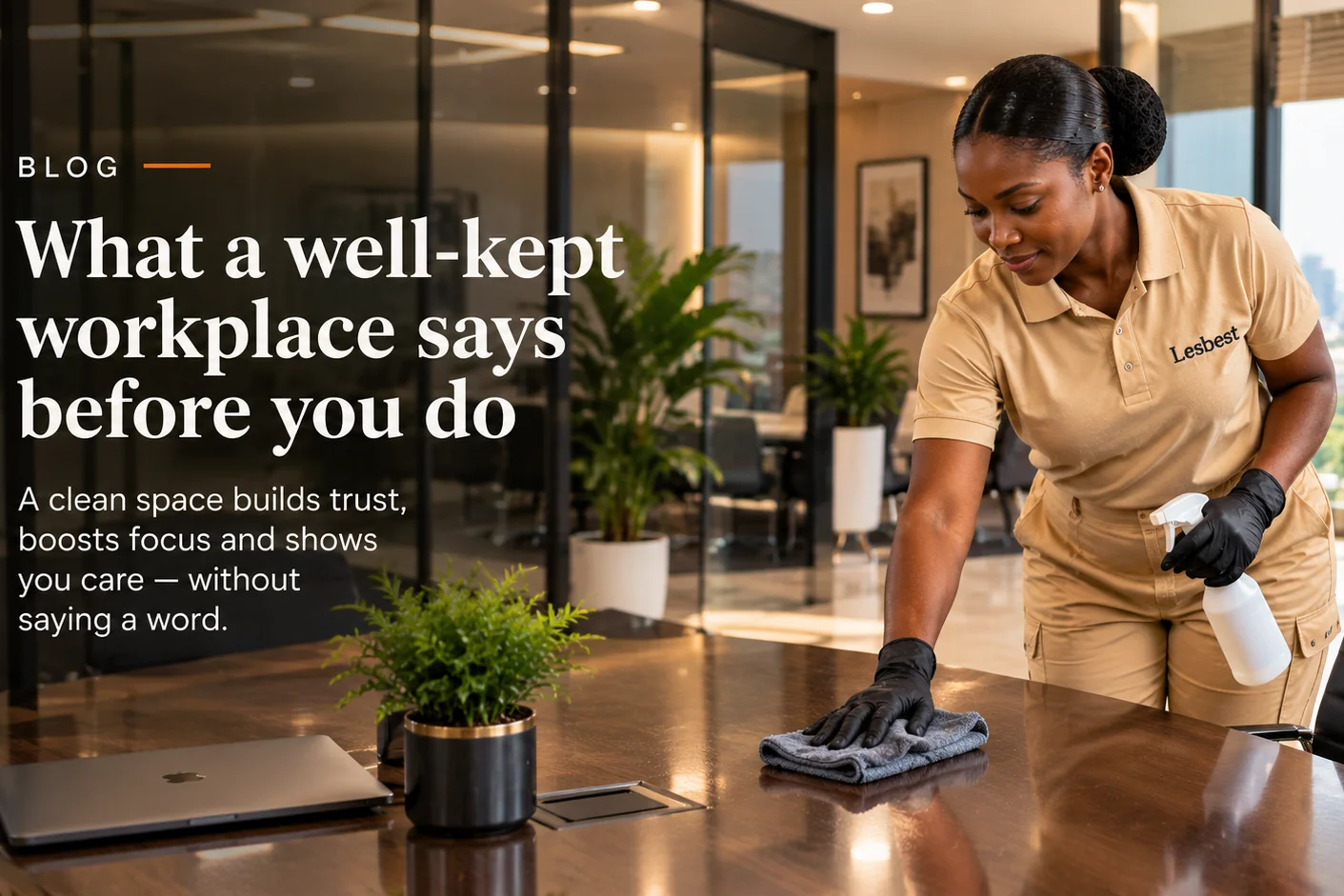
What clients notice first in a well-kept workplace
A practical office-cleaning guide for keeping reception areas, workspaces and shared facilities ready for staff and visitors.

Home · 05 August 2026
A practical way to get your home or short-let ready for guests
A room-by-room checklist for preparing a comfortable, clean welcome without leaving everything until the last minute.